Zambia’s Social Protection Policy: What It Means for Target Groups
Social protection is an important tool for reducing poverty, vulnerability and inequality in Zambia. The Revised National Social Protection Policy 2025 provides a framework for protecting and improving the welfare and livelihoods of people who face poverty, deprivation, risks and shocks. Unlike a system that only responds to people after they have fallen into extreme poverty, the policy takes a broader life-cycle approach, recognising that people face different risks and needs from conception and childhood through youth, adulthood and old age.
A shift towards protection throughout life
One of the most important changes in the policy is its focus on social protection throughout the human life cycle. This means that support should not be limited only to the poorest households. Instead, the policy recognises that anyone can become vulnerable because of events such as illness, disability, unemployment, old age, death, disasters or climate-related shocks. The life-cycle approach therefore seeks to protect people from falling deeper into poverty while also helping vulnerable people build their human capital, livelihoods, resilience and dignity.
In practical terms, this means that a household may require different forms of support at different times. A pregnant woman may need maternity protection and healthcare; a child may need nutrition, education and protection from exploitation; a young person may need skills and employment opportunities; an adult may need income security or social insurance; while an older person may need a pension, healthcare and income support.
Maternity and early childhood
For pregnant women, mothers and young children, the policy recognises the importance of protection from conception until a child reaches two years of age. This period is critical for maternal health, child development and nutrition. The policy seeks to improve access to healthcare, nutrition and maternity protection while addressing income loss and other vulnerabilities faced by mothers.
A major implication is the need to extend social protection beyond formal employment. Many women work in the informal economy and do not enjoy the same maternity benefits available to formal-sector employees. The policy therefore identifies the extension of maternity and paternity benefits to the informal economy as an important measure. This could provide greater protection for families who currently lack adequate income support during pregnancy, childbirth and early childcare.
Children and adolescents
For children and adolescents, the policy means greater attention to the conditions that affect their development and future opportunities. Children may face poverty, poor nutrition, inadequate healthcare, school exclusion, child labour, child marriage, disability-related barriers, neglect and lack of protection.
The policy recognises that social protection for children must go beyond cash support. It should also promote access to quality education, healthcare, nutrition, social care and protection from discrimination and exploitation. The policy seeks to enhance coverage of social protection for children and improve access to early childhood development services. For vulnerable children, this can mean better opportunities to remain in school, access essential services and avoid harmful coping strategies that can perpetuate poverty from one generation to the next.
Young people
Young people are a major target group because they face challenges such as unemployment, underemployment, limited access to skills, difficulty accessing capital and inadequate income-earning opportunities. For this group, the policy means a stronger focus on education, skills development, entrepreneurship, access to finance and opportunities for productive employment.
The policy also recognises that existing programmes do not always adequately respond to the diverse needs of young people. It therefore seeks to enhance social protection coverage for the youth. The broader goal is to help young people move from vulnerability towards economic independence and meaningful participation in national development.
Adults and working-age people
For adults, social protection can provide support when individuals are unable to meet their own needs or support their families because of poverty, illness, disability, unemployment, work-related injuries or other shocks. The policy recognises that many working-age Zambians, particularly those in the informal economy, remain outside formal social protection systems.
This is particularly important because the policy identifies the informal economy as a major gap in social protection coverage. The policy therefore seeks to strengthen coverage for adults and expand access to benefits beyond those working in formal employment. This could include greater access to social insurance, health insurance, livelihood support, cash assistance and other measures that help households maintain income and cope with shocks.
The policy also addresses the so-called “missing middle”—people who are not poor enough to qualify for programmes aimed at the ultra-poor but are not financially secure enough to consistently contribute to formal social insurance schemes. A more comprehensive social protection system could help close this gap.
Older persons
For older persons, the policy recognises the challenges associated with ageing, including declining income, poor living conditions, health needs, disability and increased dependence on others. The weakening of traditional extended-family support systems has also increased the vulnerability of some older people, particularly those caring for grandchildren.
The policy therefore highlights the need to strengthen income security, access to healthcare and social services for older persons. Its life-cycle approach also supports the idea that protection should be available before, during and after working life, helping people prepare for old age rather than only responding when they are already in severe hardship.
Persons with disabilities and other vulnerable groups
Persons with disabilities are also an important target group under the policy. Social protection should help reduce the additional economic and social disadvantages that can result from disability, including barriers to education, employment, healthcare, infrastructure and participation in community life.
The policy calls for expanded social protection provision for persons with disabilities to strengthen their social and economic resilience and improve access to essential services. It also emphasises inclusion, non-discrimination and affirmative action for vulnerable groups.
Protection against hunger, climate shocks and disasters
The policy is also significant for households affected by droughts, floods, crop pests, epidemics and other shocks. Zambia's vulnerability to climate change can affect food security, livelihoods, health, shelter and access to water, especially among rural communities.
The policy therefore promotes shock-responsive social protection, meaning that existing programmes should be able to expand or adapt when major emergencies occur. For example, emergency cash transfers can be used to support households affected by droughts or other large-scale crises. The policy also seeks to strengthen climate resilience and anticipatory action so that communities can be better prepared before disasters occur.
Nutrition as a central part of social protection
Another important feature of the policy is its focus on nutrition-sensitive social protection. Poverty is closely linked to inadequate nutrition, and poor nutrition can affect health, education, productivity and child development.
The policy seeks to mainstream nutrition into social protection programmes so that assistance does not only provide income or food, but also contributes to healthier diets and better nutrition outcomes. This is particularly important for pregnant women, children, adolescents, vulnerable households and other groups at risk of malnutrition.
What the policy means for Zambia as a whole
Overall, the Revised National Social Protection Policy 2025 represents a move towards a more comprehensive and coordinated social protection system. Its main objectives include improving protection throughout the life cycle, strengthening nutrition-sensitive programmes, improving responses to shocks, ensuring sustainable financing, strengthening institutions, improving communication and integrating issues such as gender, HIV and disability into social protection.
For ordinary Zambians, the policy's significance lies in its attempt to make social protection more responsive to people's real experiences. It recognises that vulnerability is not limited to one group or one moment in life. A person may be secure today but become vulnerable tomorrow because of illness, unemployment, disability, a natural disaster or old age.
The success of the policy, however, will depend on implementation. This includes adequate and sustainable financing, improved coordination between government institutions, wider coverage, stronger systems for identifying beneficiaries and better delivery of services at local level. The policy itself recognises that implementation will be complex and will require collaboration among government, civil society, communities and other stakeholders.
Conclusion
The Zambia Social Protection Policy 2025 is essentially a commitment to protect people at different stages of life and to reduce the risks that push individuals and households into poverty. For mothers, it promises stronger maternity protection; for children, improved access to education, nutrition, healthcare and protection; for youth, greater opportunities for skills and livelihoods; for adults, broader income and social security protection; for older persons, improved support and dignity; and for persons with disabilities and other vulnerable groups, greater inclusion and access to essential services.
Its central message is that social protection should not be viewed simply as charity or relief. It is an investment in people, human development and national resilience. If effectively implemented, the policy can help Zambia reduce poverty, prevent vulnerable households from falling deeper into hardship and create a more inclusive society in which people are protected throughout the different stages of life.
Zambia’s Social Protection Policy: What It Means for Target Groups
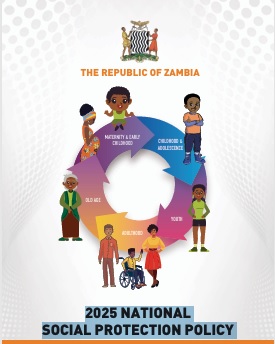
Zambia’s Revised National Social Protection Policy 2025 adopts a life-cycle approach to reduce poverty, vulnerability and inequality by providing protection and support at different stages of life. It focuses on maternity and early childhood, children and adolescents, youth, adults, older persons and vulnerable groups such as persons with disabilities. The policy aims to improve access to social protection, nutrition, social security, livelihoods and essential services, while strengthening the country’s ability to respond to shocks such as climate-related disasters. Overall, it seeks to build a more inclusive, resilient and comprehensive social protection system that protects people from poverty and supports their well-being throughout their lives.
Comments (0)